


Common Problems and Solutions When Making Scented Candles-2
2026-04-20 18:51Uneven Burning (Tunneling)
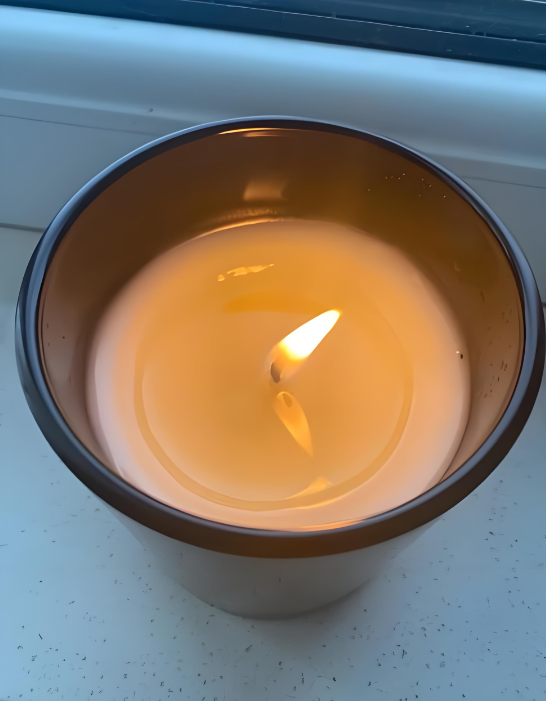
Tunneling occurs when a candle burns only in the center, leaving a thick layer of unburned wax around the edges.
This not only wastes wax but also shortens the candle’s burn time and reduces scent throw, as the unburned wax cannot release its fragrance.
Causes
- Candle wick is too small: A wick that is too thin cannot generate enough heat to melt the entire surface of the wax, leading to tunneling.
- Burning the candle for too short periods: Lighting a candle for less than 2-3 hours on the first burn prevents the wax from melting evenly across
the surface, establishing a “tunnel” that persists in future burns.
- Poor wax quality or mixing: Wax that is not melted thoroughly or contains impurities may burn unevenly.
- Candle container is too narrow: A narrow container restricts heat distribution, making it harder for the wax to melt evenly.
Solutions
- Choose the correct wick size: Match the wick size to the diameter of your candle container. A general rule is: for containers 2-3 inches
in diameter, use a medium wick; for 3-4 inches, use a large wick. Test different wick sizes if needed.
- Burn the candle properly on the first use: Light the candle and let it burn until the wax melts evenly across the entire surface (2-3 hours).
This creates a “memory ring” that ensures even burning in subsequent uses.
- Ensure wax is fully melted and mixed: Melt the wax slowly over low heat, stirring occasionally to ensure it is smooth and free of lumps.
Avoid overheating, which can damage the wax’s burning properties.
- Use a wider container: If tunneling persists, try using a container with a wider diameter to improve heat distribution.
You can also gently warm the sides of the container with a hair dryer to melt the unburned wax and reset the burn.
Wax Cracking or Shrinking
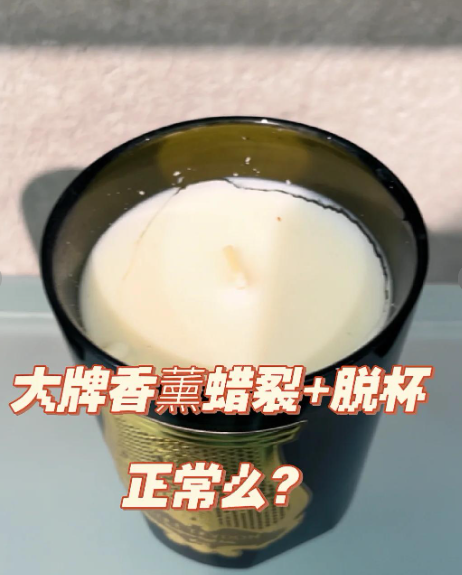
Cracking or shrinking of the wax surface is a common issue after pouring, resulting in an uneven, unprofessional appearance.
This can happen immediately after pouring or during the curing process.
Causes
- Pouring wax at too high a temperature: Pouring wax that is too hot (above 200°F/93°C) causes the wax to cool too quickly, leading to shrinkage and cracking.
- Rapid cooling: Placing the poured candle in a cool or drafty area causes the wax to cool unevenly, resulting in cracks.
- Overfilling the mold or container: Pouring wax too full can cause the wax to shrink as it cools, leaving gaps or cracks.
- Using incompatible wax and container: Some containers (e.g., cold glass) can cause the wax to cool too quickly when poured, leading to cracking.
Solutions
- Pour wax at the correct temperature: Most waxes should be poured at 170-185°F (77-85°C). Allow the wax to cool slightly after melting before pouring to reduce shrinkage.
- Cool the candle slowly: Place the poured candle in a warm, draft-free area to cool naturally. Avoid placing it in the refrigerator or near air conditioning.
- Leave a small gap when pouring: Do not fill the mold or container to the top—leave a 1/8 inch (0.3 cm) gap to accommodate wax shrinkage as it cools.
- Pre-warm the container: If using glass or metal containers, warm them slightly (to 100-120°F/38-49°C) before pouring wax. This prevents rapid cooling and cracking.