



How to Distinguish the Quality of a Candle Machine? 5 Key Components to Check Before Purchase
2026-03-18 10:03In the candle manufacturing industry, the quality of a candle machine directly determines production efficiency, product consistency, and long-term operational costs.
Whether you are a small-scale workshop starting a candle business or a large enterprise expanding production lines, selecting a high-quality candle machine is a critical
decision that affects the sustainability of your business.
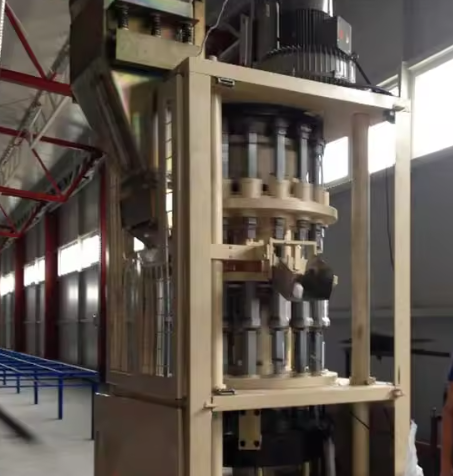
Many buyers struggle to identify superior candle machine models among numerous options, but focusing on the core components can simplify the judgment process.
This article will detail the 5 key components you must check before purchasing a candle machine, helping you accurately distinguish its quality and avoid costly mistakes.
1. Wax Melting Tank: The Core of Stable Wax Processing
The wax melting tank is the heart of any candle machine, responsible for melting solid wax (such as paraffin, soy wax, or beeswax) into a uniform liquid state—an essential
step for producing high-quality candles. A high-quality wax melting tank directly ensures the stability of the candle making process and the purity of the wax liquid.
When inspecting a candle machine’s wax melting tank, first pay attention to its material. The best options are made of 304-grade stainless steel, which is corrosion-resistant,
heat-resistant, and easy to clean, preventing wax from sticking to the tank and avoiding contamination.
Avoid tanks made of ordinary mild steel, as they are prone to rust and deformation after long-term contact with high-temperature wax, affecting the candle quality.
2. Molding System: The Guarantee of Candle Shape Consistency
The molding system of a candle machine determines the shape, size, and surface smoothness of the finished candles.
For candle manufacturers, consistent product appearance is key to building brand reputation, making this component a critical indicator of candle machine quality.
For mold-based candle machines, the mold material is the first thing to check.
Copper molds are preferred for their excellent thermal conductivity and corrosion resistance, ensuring rapid and uniform cooling of the
wax liquid, which results in smooth candle surfaces and easy demolding. The mold’s precision is also important—high-quality molds have tight seams,
no burrs, and consistent inner diameters, avoiding uneven candle thickness or misshapen products. For pouring-type candle machines (used for jar or cup candles),
check the number and precision of the pouring nozzles: multiple nozzles can improve production efficiency, while adjustable nozzles allow flexibility in producing candles
of different sizes and shapes. Ensure the nozzles are unobstructed and can pour wax evenly without leakage, which is crucial for reducing wax waste and ensuring product consistency.
3. Wick Centering Mechanism: A Small Component with a Big Impact
The wick is the core of a candle burning performance, and the wick centering mechanism of a candle machine directly affects whether the
wick is placed in the center of the candle. A misaligned wick can cause uneven burning, dripping, or even candle collapse, significantly reducing the product quality and user experience.
A high-quality candle machine wick centering mechanism should be stable and adjustable.
It should firmly fix the wick during the production process, ensuring no deviation even when the wax liquid is poured
or cooled. Look for mechanisms with adjustable tension screws, which allow you to adapt to wicks of different thicknesses
and ensure consistent centering for every candle. Some advanced candle machines are also equipped with automatic wick insertion functions,
further improving production efficiency and centering accuracy, which is especially important for large-scale candle production lines.
4. Cooling System: Ensure Efficient Production and Product Quality
After the wax liquid is poured into the mold, rapid and uniform cooling is required to solidify the candle into its final shape.
The cooling system of a candle machine directly affects production efficiency and the structural stability of the finished product—poor cooling can
lead to slow solidification, uneven shrinkage, or surface cracks in candles.
5. Drive System: The Power Source of Stable Operation
The drive system is the power core of a candle machine, responsible for driving the operation of the wax melting, pouring, molding, and
demolding processes. A stable and durable drive system ensures the candle machine can operate continuously for a long time, reducing downtime and maintenance costs.
When checking the drive system, focus on the motor and transmission components.
The motor should have sufficient power matching the candle machine’s production capacity—underpowered
motors can lead to slow operation or even stalling during heavy-load production. High-quality motors are energy-efficient, low-noise,
and have a long service life, which is crucial for reducing operational costs. The transmission components (such as gears, belts, and bearings)
should be made of high-strength materials, with tight connections and smooth operation, avoiding jamming or wear during use. Additionally, look
for candle machines with overload protection and emergency stop functions, which can prevent damage to the drive system and ensure operational safety.